Review of the play “Nijinsky: The Brilliant Idiot”, Vakhtangov Theatre – Dance of the Looking Glass
Anna Smolyakova April 14, 2019

A recent graduate of the directing faculty at the Boris Shchukin Theatre Institute, Leila Abu-al-Kishk, continues the theme of genius in the arts, which she began last year with “Frida: Life in Color.” This time, the story of painting gives way to the story of ballet. The play “Nijinsky: The Brilliant Idiot” brings to life the biography of the great dancer within the intimate space of the Amphitheatre on the Simonov Stage of the Vakhtangov Theatre.
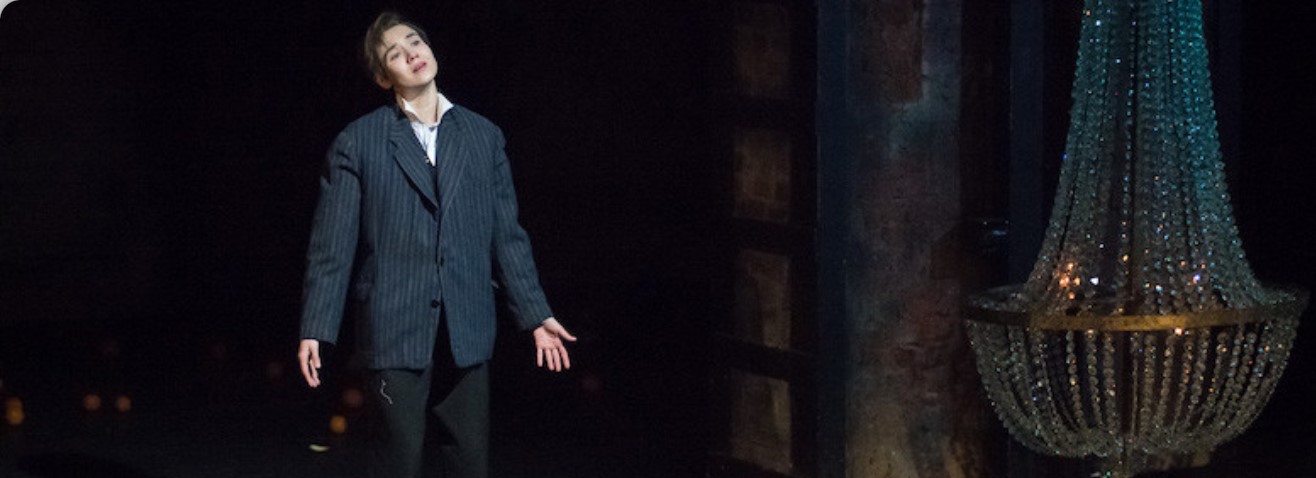
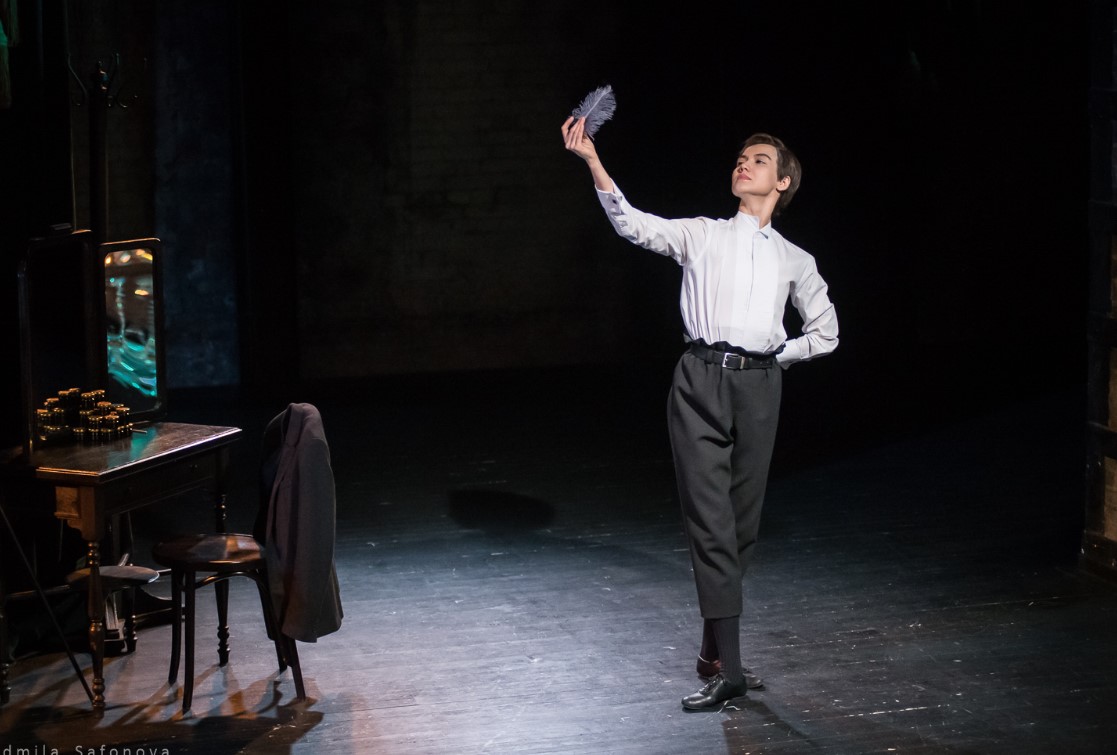
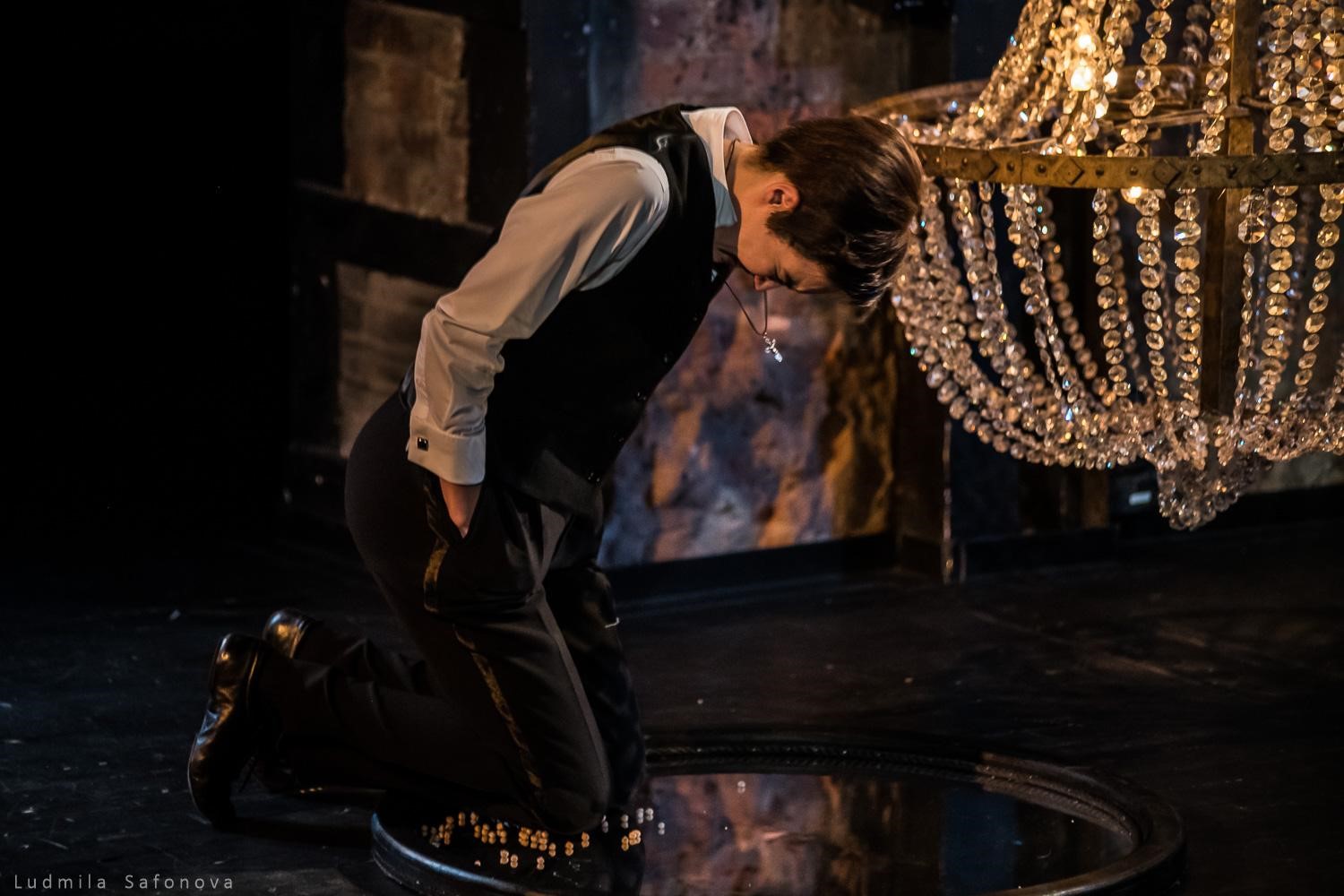
There is no ballet in the traditional sense here, yet dance permeates everything—visibly and invisibly: in the words of the characters, in mirrors, in the enormous theatre chandelier descending to the floor, and, of course, within the main character. Or rather, the main character is a heroine, as the role of Vaslav Nijinsky is performed by actress Adelina Gizatullina. Bringing a ballet dancer to life on stage is a major challenge for a dramatic actor. For six months, Adelina trained with a classical dance teacher to understand and embody the inner state that sustains the art of ballet.
But knowing how to move is not enough for a dramatic performance—the actor bears a double burden. Especially since Nijinsky is an extraordinarily complex character: fully absorbed in his art, intensely self-focused, incredibly vulnerable, mentally unstable, and by midlife already diagnosed with schizophrenia—the brilliant dancer inhabits a world entirely separate from that of those around him.
Adelina Gizatullina captures every shade of emotion in her portrayal of Nijinsky. At every stage of his life—child prodigy, mature man, husband, father—his obsession with dance eclipses the world, expressed in every look and gesture of the actress.
The inner world of a person on the edge is the foundation and central theme of the play; it is around this unseen “looking-glass” that the action is structured. The real world and the people living in it serve merely as background and illustration, further emphasizing the singular focus on the protagonist. Yet the major stages of Vaslav Nijinsky’s life are depicted clearly, understandable even to an audience unfamiliar with his story.
The story begins at the moment when the famous impresario Sergei Diaghilev (Sergey Bataev / Denis Samoylov) notices young Nijinsky at the Mariinsky Theatre and invites him to join his troupe. The play touches on the personal relationship between Nijinsky and Diaghilev with subtlety and delicacy, hinting at it rather than depicting it explicitly.
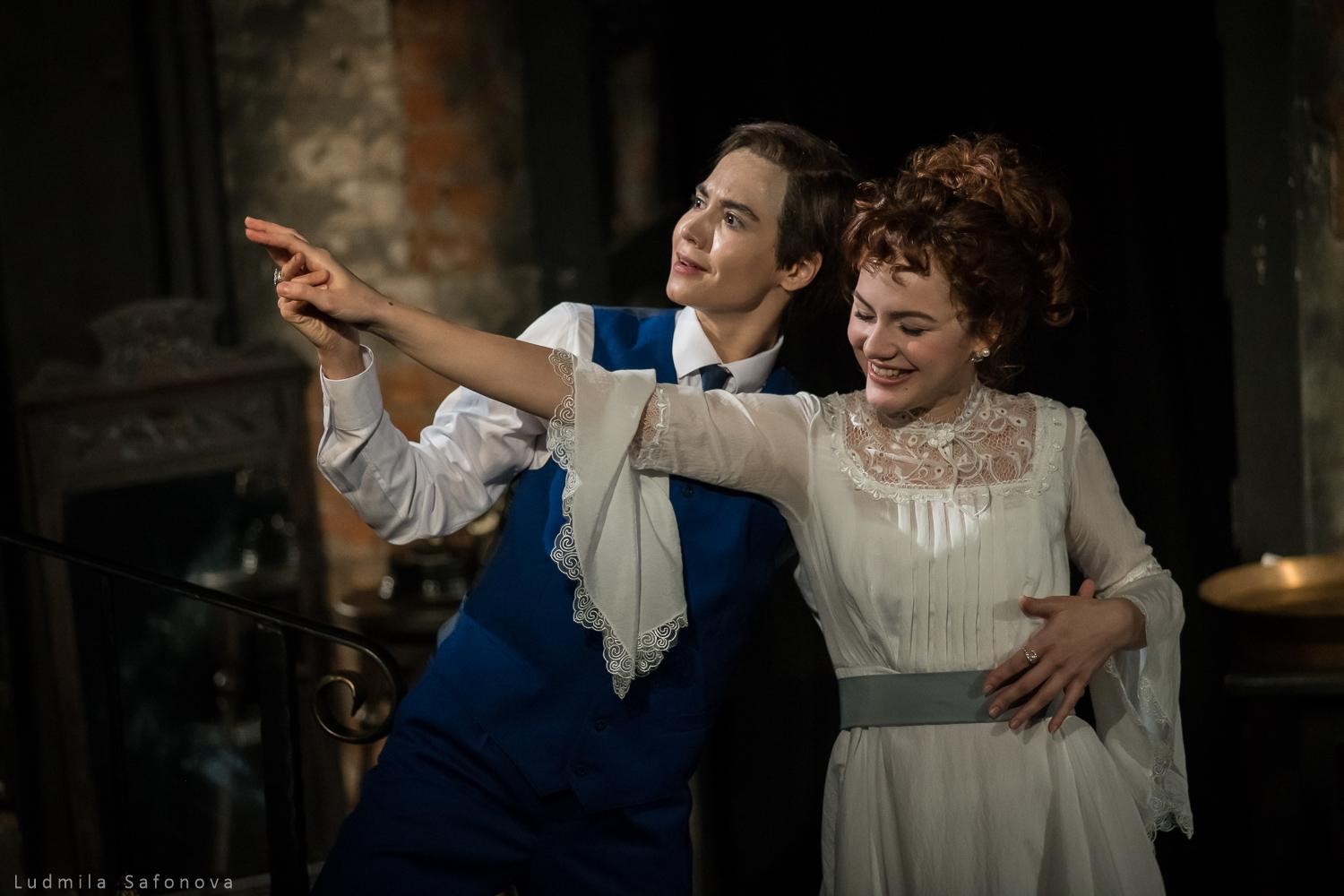
It is worth noting that, alongside the theme of artistic torment, the play vividly explores the theme of personal self-determination. Nijinsky was deeply religious and desperately tried to live according to God’s law. This led to his sudden and secret marriage to the Hungarian aristocrat and his admirer, Romola de Pulsky, which infuriated Diaghilev to the point that he annulled all agreements and effectively ruined Nijinsky. Romola, played by Asya Domskaya, is a delicate, airy figure, dressed in lace, curls, and ruffles—captivated by the stage image rather than by Nijinsky himself. When faced with exile, a daughter, and a husband unprepared for life, she finally comes down to earth and realizes her dire situation. She is no longer the chatterbox or the passionate admirer; she is unhappy, and even her costumes shift from bright, joyful tones to mournful black.
No matter how tragic the story on stage, I believe the audience should always be given a chance to smile. In the play, there are two characters who are not exactly comedic, but subtly ironic: the composer Igor Stravinsky, played by Yan Gaharmanov, and Diaghilev’s servant, Vasily, played by Oleg Lopukhov.
Vasily is far from a typical “fetch-and-carry” servant. He has an in-depth understanding of his master’s world, knows all the backstage workings of the theatre, and is an excellent psychologist—capable at times of manipulating people, and in certain situations even acting as a sort of “gray eminence.” Clever and sly, he is nonetheless kind-hearted and deeply invested in what is happening. Oleg Lopukhov’s facial expressions are at times utterly hilarious, making it impossible not to smile.
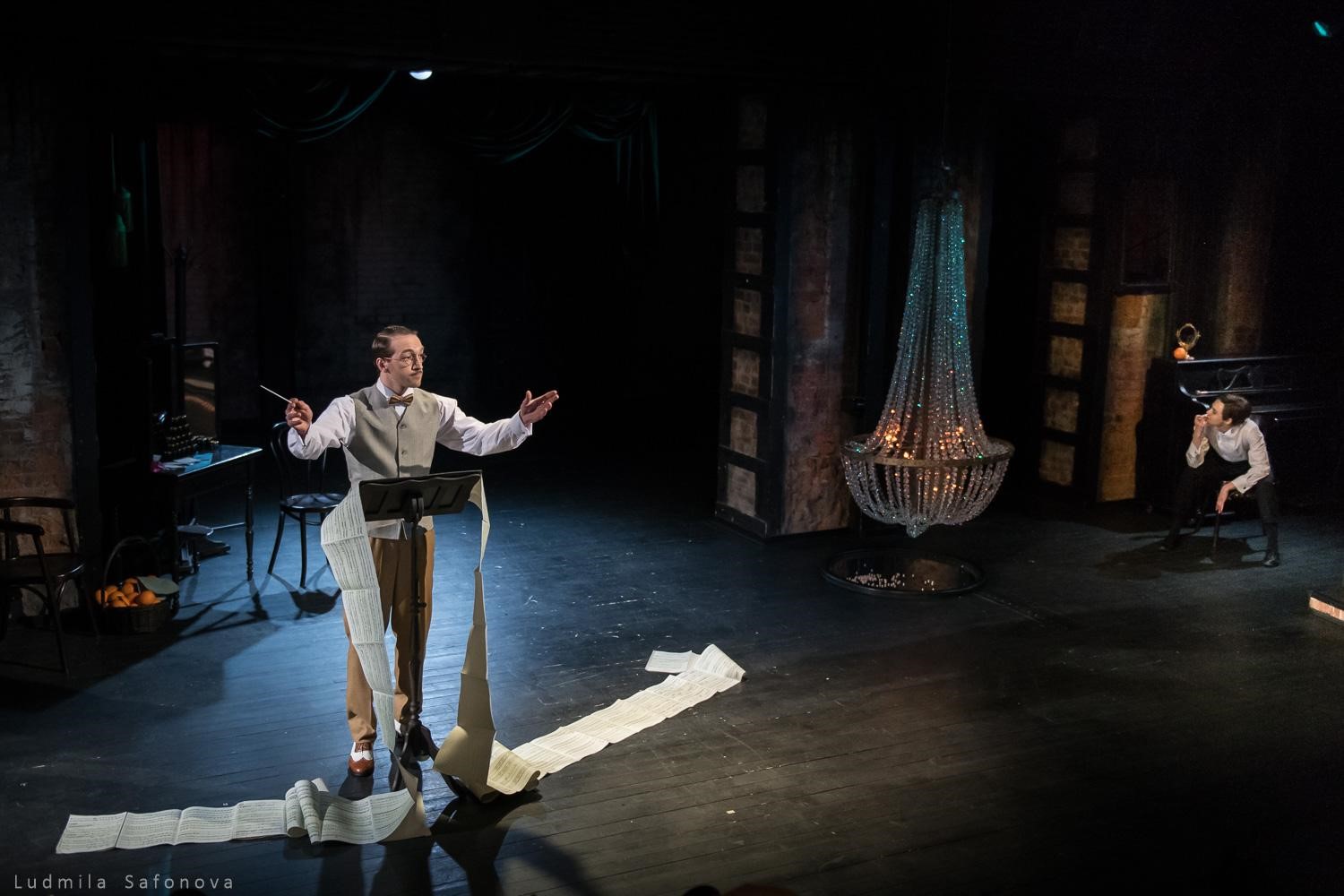
Stravinsky, as portrayed by Yan Gaharmanov, comes across as a monument to his own grandeur, which is genuinely funny—especially in one scene where, in a fit of rage, Stravinsky storms off the stage, leaving a trail of sheet music behind him.
All these people, in essence, are quite ordinary—talented in some ways, less so in others, but ultimately understandable and relatable to society. Except for one. What gives the play its special meaning is the fact that this story is real, and its characters are not fictional—they were real people. How does one avoid extinguishing a genius, how does one recognize and nurture the blazing fire of talent within them? And how does a person live, gifted with such talent, yet utterly helpless in the ordinary world of ordinary people?