MATERNAL LOVE: I CREATED AUDREY HEPBURN AT THE VAKHTANGOV THEATRE
May 6, 2026 — Maria Pervushina | Photos: Alexander Malakhov

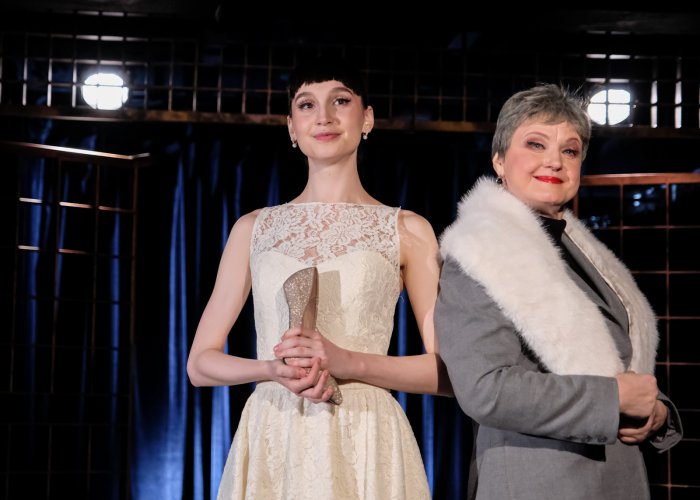
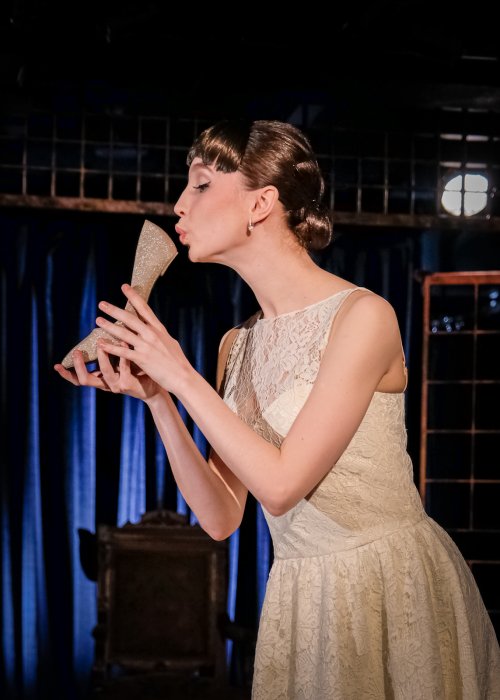
On the Studio Stage of the Vakhtangov Theatre, the premiere of I Created Audrey Hepburn took place — the directorial and dramaturgical debut of Adeline Gizatullina. The intimate production examines the life of the Hollywood legend through the lens of her complicated relationship with her mother, Baroness Ella van Heemstra.
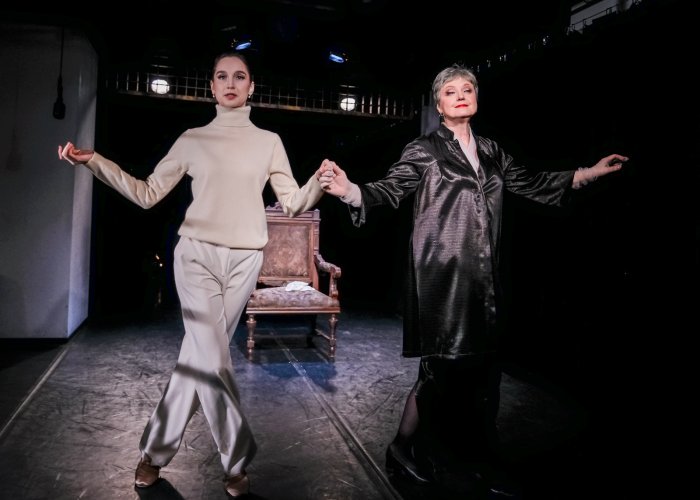
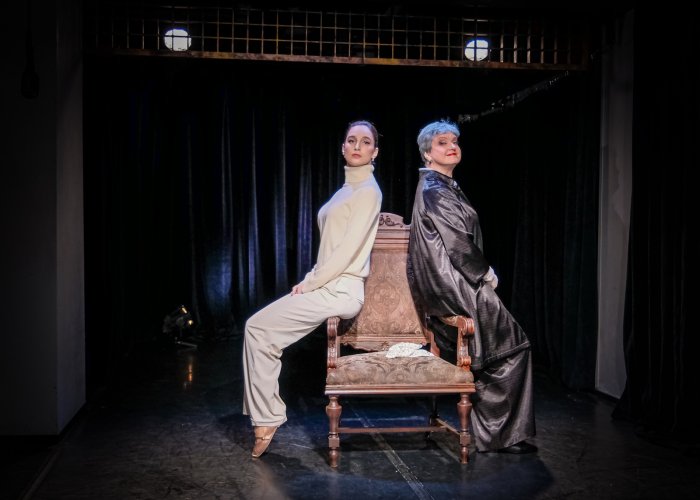
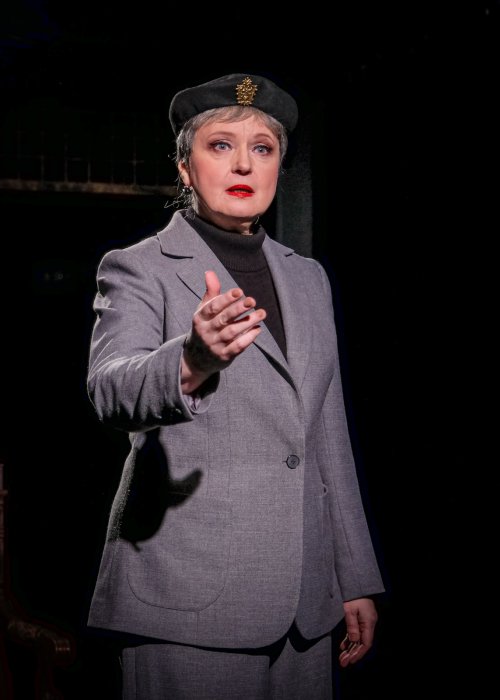
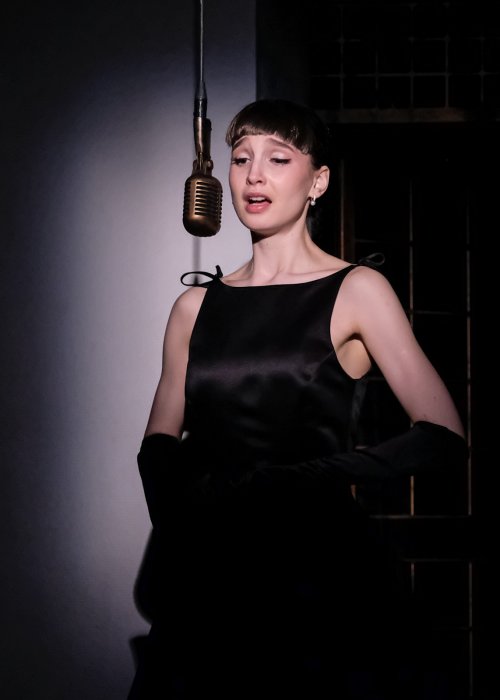
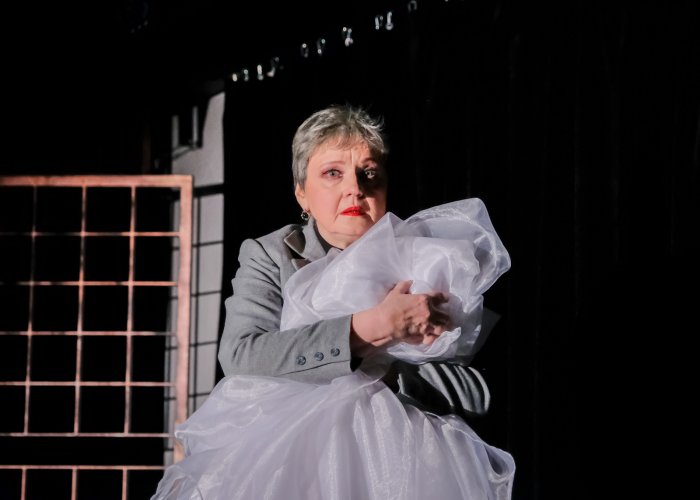
The action of the one-act play, written specifically for this staging, appears to be set in the early 1980s: Audrey Hepburn (Anna Chumak) has just separated from her second husband, Italian psychiatrist Andrea Dotti. Her mother, Baroness van Heemstra (Elena Sotnikova), unexpectedly arrives and, upon learning about the breakup, begins to criticize her daughter. In response, Audrey, in anger, declares that she has spent her entire life in a “prison” of maternal expectations and ambitions. What follows is the monologue of a shocked and wounded mother — an attempt to find in memory the moment when the bond between them began to unravel.
Former Vakhtangov Theatre actress Adeline Gizatullina first became interested in Hepburn’s figure in childhood, and in 2021, together with then-artistic director Rimas Tuminas, conceived a play about the legendary actress. The dramaturgical basis of the production is the biography “Audrey Hepburn. Life in Her Own Words. Confessions of Love”, compiled from interviews and public sources, since Hepburn herself never wrote memoirs. Gizatullina’s play inverts this structure: the mother becomes the central speaking figure.
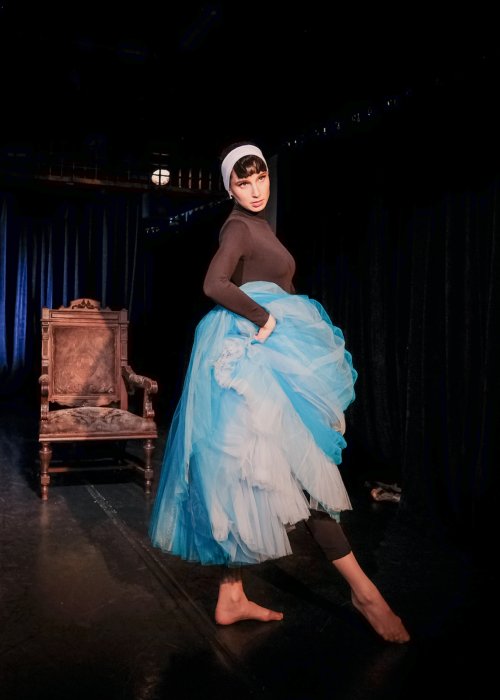
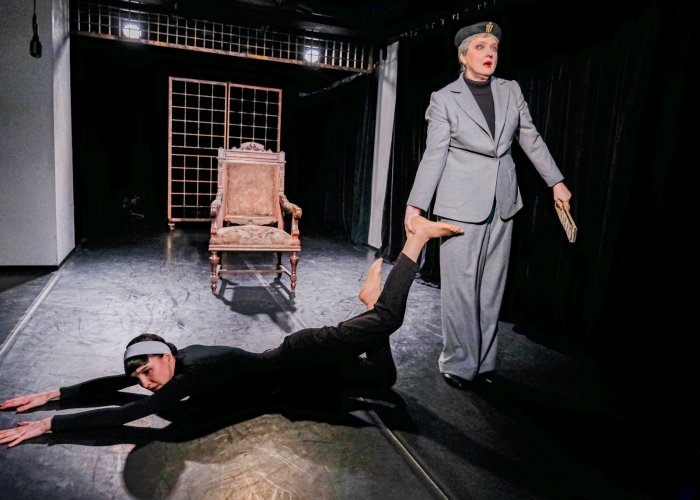
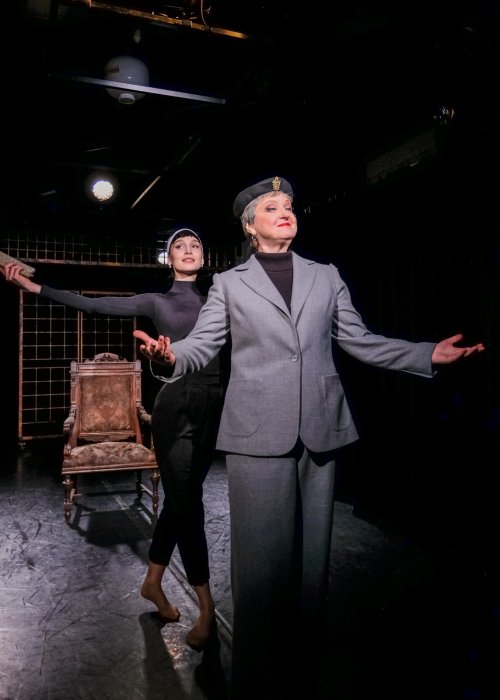
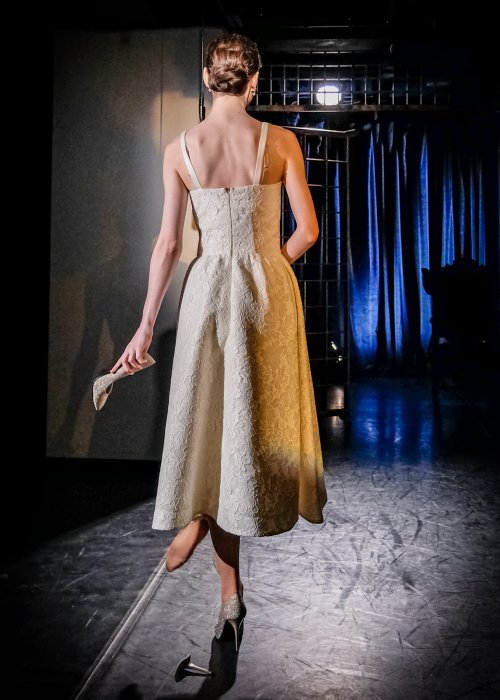
The Baroness, once aspiring to be an actress herself, shapes her daughter’s career like a demanding and sometimes ruthless director. Audrey’s life under her guidance becomes an endless performance, a motif emphasized through the production’s choreographic language (choreographer Olga Logvina). Entire episodes are dominated by the mother’s monologues, while Audrey often remains silent, reduced to a physical echo of words spoken about her.
The stage space, designed as Hepburn’s apartment (set designer Elzar Abdrakhmanov), is dominated by a suspended microphone. At moments, mother or daughter perform songs or speeches into it, reinforcing the sense of life as continuous performance.
This performativity reaches its peak when the characters briefly become aware of the audience. The Studio Stage, seating only 35 spectators, places viewers almost within arm’s reach of the action. In a strikingly comic yet tragic moment, Audrey freezes with an artificial smile while her mother adjusts her posture — a vivid image of what it means to be a “living legend,” an “icon,” and a universal model of perfection: someone denied the right to imperfection.
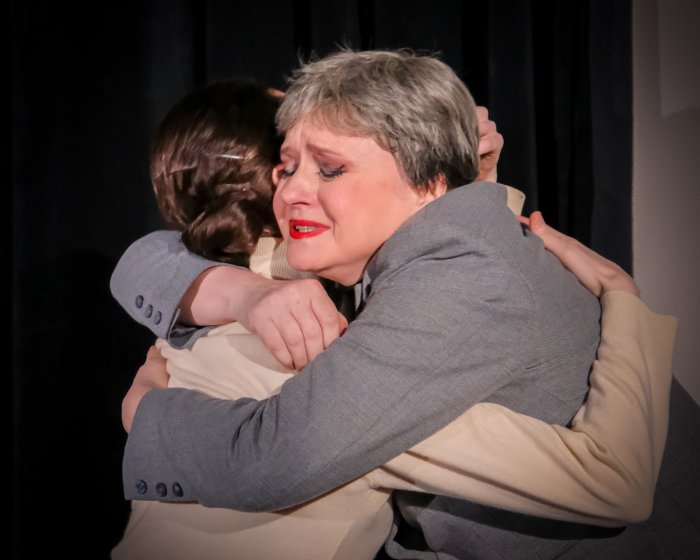
Yet beneath Audrey’s suffering lies another, less obvious pain. The strength of Gizatullina’s production is that neither mother nor daughter is reduced to simple categories of victim and oppressor. Elena Sotnikova’s Baroness evokes equal sympathy. Her character proudly recalls controlling Audrey’s life — taking away cabaret earnings, forcing her to prioritize career over family — but gradually her self-assured tone turns into painful confession.
What begins as a monologue of pride becomes an act of unintended repentance, transforming the audience from admirers into silent judges capable of granting forgiveness.
In real life, Audrey Hepburn’s mother likely never told her daughter that she loved her — but theatre gives her that possibility. Whether such a person deserves forgiveness for wounding those closest to her is a question each viewer must answer individually. I Created Audrey Hepburn strongly suggests that the answer may be yes.
The production will continue on the Studio Stage of the Vakhtangov Theatre on May 21, June 5, and June 21.